
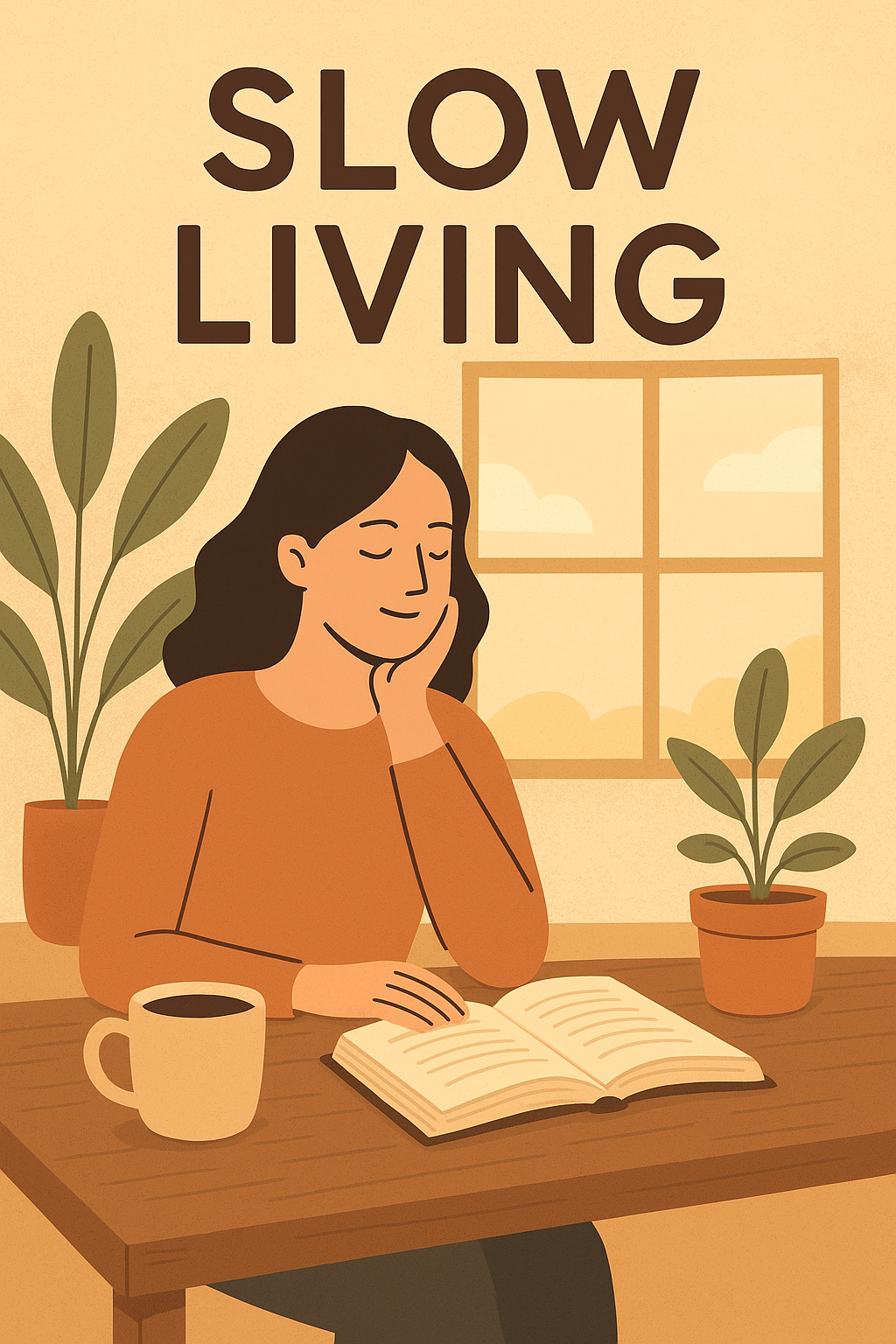
In a society that glorifies speed, productivity, and constant multitasking, slowing down can feel almost rebellious. We live in a culture where busyness is worn like a badge of honor — where success is often measured by how much we can do, how fast we can move, and how little we rest.
But this relentless pace comes at a cost. Stress, burnout, anxiety, and disconnection are on the rise. Many people find themselves running from one task to another, yet feeling unfulfilled. In this environment, slow living offers an alternative — a path toward peace, mindfulness, and a deeper sense of joy.
Slow living isn’t about doing everything at a snail’s pace or abandoning ambition. It’s about living intentionally, focusing on what truly matters, and creating space for presence and purpose.
What Is Slow Living?
At its core, slow living is a lifestyle philosophy that encourages you to step back from the rush of modern life and live more consciously. It’s about simplifying, savoring, and being fully present in each moment.
The movement began in the late 1980s with the Slow Food movement in Italy, founded as a response to fast food culture. Over time, the concept expanded beyond food to encompass all areas of life — work, travel, relationships, and even digital habits.
Slow living is not about doing less for the sake of laziness. Rather, it’s about doing less of what doesn’t matter so you can do more of what truly does. It invites you to replace constant busyness with balance, and endless consumption with appreciation.
Why Slow Living Matters
In today’s hyperconnected world, we are constantly bombarded with information, notifications, and expectations. This overstimulation keeps our nervous systems on high alert and prevents our minds from ever fully resting.
Adopting a slower way of living helps us reconnect — with ourselves, with others, and with the world around us. It promotes well-being in several important ways:
-
Reduces Stress and Burnout – Taking time to rest, reflect, and move at a natural pace allows the body and mind to recover from chronic stress.
-
Improves Focus and Productivity – When you slow down, you actually become more efficient because you give full attention to one task at a time.
-
Enhances Mental Health – A slower lifestyle encourages mindfulness and gratitude, which reduce anxiety and increase emotional balance.
-
Strengthens Relationships – When you’re not rushing, you can connect more deeply with family, friends, and even strangers.
-
Promotes Sustainability – Slow living often leads to consuming more mindfully and reducing waste, benefiting both personal and planetary health.
Principles of Slow Living
While there’s no single formula for slow living, several core principles guide the practice:
1. Intentionality
Be deliberate about how you spend your time, energy, and attention. Instead of reacting to every demand or distraction, ask yourself: Does this align with my values?
Intentional living turns routine moments — like drinking coffee or walking to work — into mindful experiences.
2. Simplicity
Declutter not just your home, but also your mind and schedule. Simplifying helps you focus on what’s essential and let go of what drains your energy.
This could mean minimizing possessions, saying no to unnecessary commitments, or limiting time spent on social media.
3. Presence
Slow living encourages you to live in the moment. Whether it’s savoring a meal, enjoying nature, or having a heartfelt conversation, presence deepens your experience of life.
Practices like meditation, journaling, or mindful breathing can help you cultivate this awareness daily.
4. Connection
Slowing down allows you to build more meaningful connections — with people, nature, and even yourself. Instead of superficial interactions, slow living invites authenticity and empathy.
Spend time outdoors, cook with loved ones, or engage in community activities that foster belonging.
5. Balance
Slow living isn’t about rejecting ambition or success — it’s about finding harmony between doing and being. It’s recognizing that rest, creativity, and joy are just as important as productivity.
Give yourself permission to pause, rest, and recharge.
How to Start Living Slowly
Transitioning to a slower lifestyle doesn’t happen overnight. It’s a gradual process of small, mindful shifts. Here are practical steps to begin your journey:
1. Create Morning Stillness
Start your day without rushing. Instead of checking your phone first thing, take a few minutes to stretch, breathe deeply, or enjoy your coffee in silence. The calm energy you create in the morning sets the tone for the entire day.
2. Prioritize What Truly Matters
Write down your top three priorities — the things that add meaning to your life. This could be health, relationships, creativity, or peace of mind. Use these as your compass when deciding how to spend your time.
3. Practice Digital Minimalism
Technology is one of the biggest barriers to living slowly. Limit screen time, turn off unnecessary notifications, and take regular “digital detox” days. Being offline helps you reconnect with the physical world.
4. Embrace Mindful Activities
Cook your own meals, read physical books, take long walks, or garden. These slow, tactile experiences ground you in the present and offer natural joy.
5. Learn to Say No
Busyness often comes from saying yes to everything. Saying no creates space for rest, creativity, and meaningful engagement. Remember, every time you say no to something unimportant, you’re saying yes to something essential.
6. Reconnect with Nature
Nature embodies slowness — the steady rhythm of seasons, the patience of growth. Spend time outdoors daily, even if it’s just sitting under a tree or watching the sunset.
7. Rest Without Guilt
Rest is not a reward for productivity — it’s a vital part of being human. Allow yourself to take naps, spend quiet evenings, or enjoy unstructured time. Stillness is where renewal happens.
The Rewards of a Slower Life
When you embrace slow living, life doesn’t become dull — it becomes richer. You start noticing the beauty in ordinary moments: the taste of homemade food, the sound of laughter, the scent of rain, the feeling of gratitude for simply being alive.
You learn that joy doesn’t come from constant achievement, but from presence. You stop chasing “more” and start appreciating “enough.”
In slowing down, you don’t lose time — you gain life.
Final Thoughts
Slow living isn’t a trend; it’s a return to what’s natural. It’s an invitation to live with intention, to choose peace over pressure, and to find contentment in simplicity.
You don’t have to escape to the countryside or quit your job to live slowly. You can start right where you are — with one mindful breath, one unrushed meal, one meaningful moment at a time.
Because in the end, the goal of slow living is not to do nothing — it’s to do everything with purpose, gratitude, and presence.